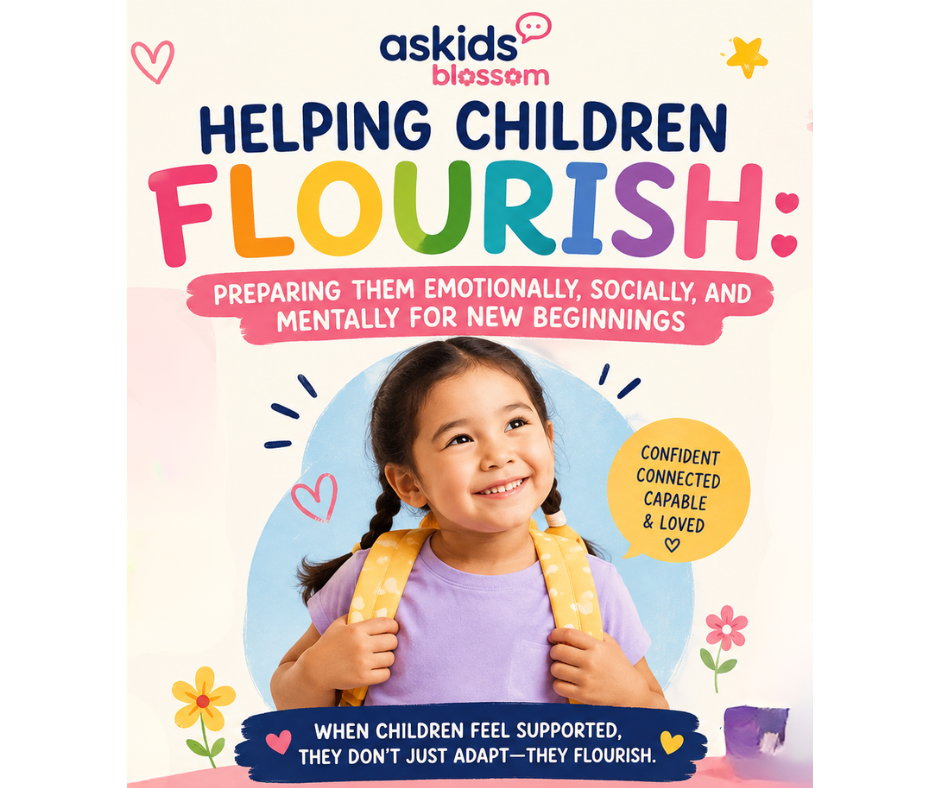
August often brings a season of change. Whether your child is starting preschool, entering kindergarten, moving to a new classroom, or simply adjusting to a different routine, transitions can bring excitement, curiosity, and sometimes anxiety.
While parents often focus on buying school supplies and organizing schedules, preparing children emotionally, socially, and mentally is just as important. A child’s confidence and emotional well-being can make all the difference in helping them adapt and thrive in new environments.
At Askids Blossom, we believe that every child deserves the opportunity to blossom with confidence, resilience, and joy. Here are practical ways parents can help prepare their children for a successful transition.
1. Talk About the Changes Ahead
Children feel more secure when they know what to expect.
Start conversations several weeks before a transition. Explain what their new environment might look like, who they may meet, and what activities they can expect.
Instead of asking only, “Are you excited?” try open-ended questions like:
- “What are you looking forward to?”
- “Is there anything you’re wondering about?”
- “How do you think your first day will feel?”
These conversations encourage children to express both excitement and worries.
2. Validate Every Emotion
It’s completely normal for children to experience mixed emotions.
Some children eagerly anticipate new adventures, while others may feel nervous about leaving familiar routines or making new friends.
Avoid dismissing their fears with phrases like:
- “You’ll be fine.”
- “Don’t be scared.”
Instead, acknowledge their feelings:
“It’s okay to feel nervous. Trying something new can feel a little scary, and I’m here to help you.”
When children feel heard, they develop emotional resilience and learn that all feelings are acceptable.
3. Practice Social Skills Through Play
Play is one of the best ways children learn.
Role-playing everyday situations can help reduce anxiety before entering a new environment.
Practice scenarios like:
- Introducing themselves
- Asking to join a game
- Sharing toys
- Waiting their turn
- Asking an adult for help
These simple activities build confidence while making learning fun.
4. Build Independence One Step at a Time
Confidence grows when children successfully complete small tasks on their own.
Encourage age-appropriate responsibilities such as:
- Packing their backpack
- Choosing tomorrow’s clothes
- Cleaning up after playtime
- Putting on shoes independently
- Carrying their own lunch bag
Each accomplishment reminds children that they are capable.
5. Create Predictable Routines
Children thrive on consistency.
A few weeks before school begins, gradually return to regular bedtime and wake-up schedules.
Practice morning routines together so the first week feels familiar rather than overwhelming.
Simple routines create emotional security and reduce stress.
6. Read Books About New Experiences
Books help children understand emotions in a safe and relatable way.
Stories about starting school, making friends, or facing new experiences allow children to see that many others feel the same way they do.
After reading, ask:
- “How do you think the character felt?”
- “What would you have done?”
- “Have you ever felt that way?”
These conversations strengthen emotional awareness and empathy.
7. Encourage a Growth Mindset
Instead of focusing on perfection, celebrate effort.
Remind your child:
- Mistakes help us learn.
- Everyone learns at their own pace.
- Trying something new takes courage.
Using phrases like:
“You haven’t learned it yet—but you will.”
helps children build resilience that lasts far beyond the classroom.
8. Stay Calm and Positive
Children often mirror the emotions of the adults around them.
If parents appear calm, encouraging, and confident, children are more likely to approach new situations with optimism.
Celebrate small victories, offer reassurance, and remember that adjustment takes time.
Helping Every Child Blossom
Every child adjusts differently.
Some jump into new experiences with excitement, while others need extra time, encouragement, and reassurance. Both responses are completely normal.
What matters most is creating a safe, supportive environment where children know they are loved, capable, and never alone during times of change.
As families prepare for new adventures this August, remember that emotional readiness is just as valuable as academic readiness.
When children feel confident, connected, and supported, they don’t just adapt to new environments—they flourish.
Final Thoughts
The beginning of a new school year is more than a fresh start—it’s an opportunity to nurture resilience, kindness, confidence, and emotional well-being.
At Askids Blossom, we’re here to support parents with practical tips, encouraging resources, and a community that celebrates every stage of childhood.
Here’s to helping every child blossom into their brightest, happiest self.

